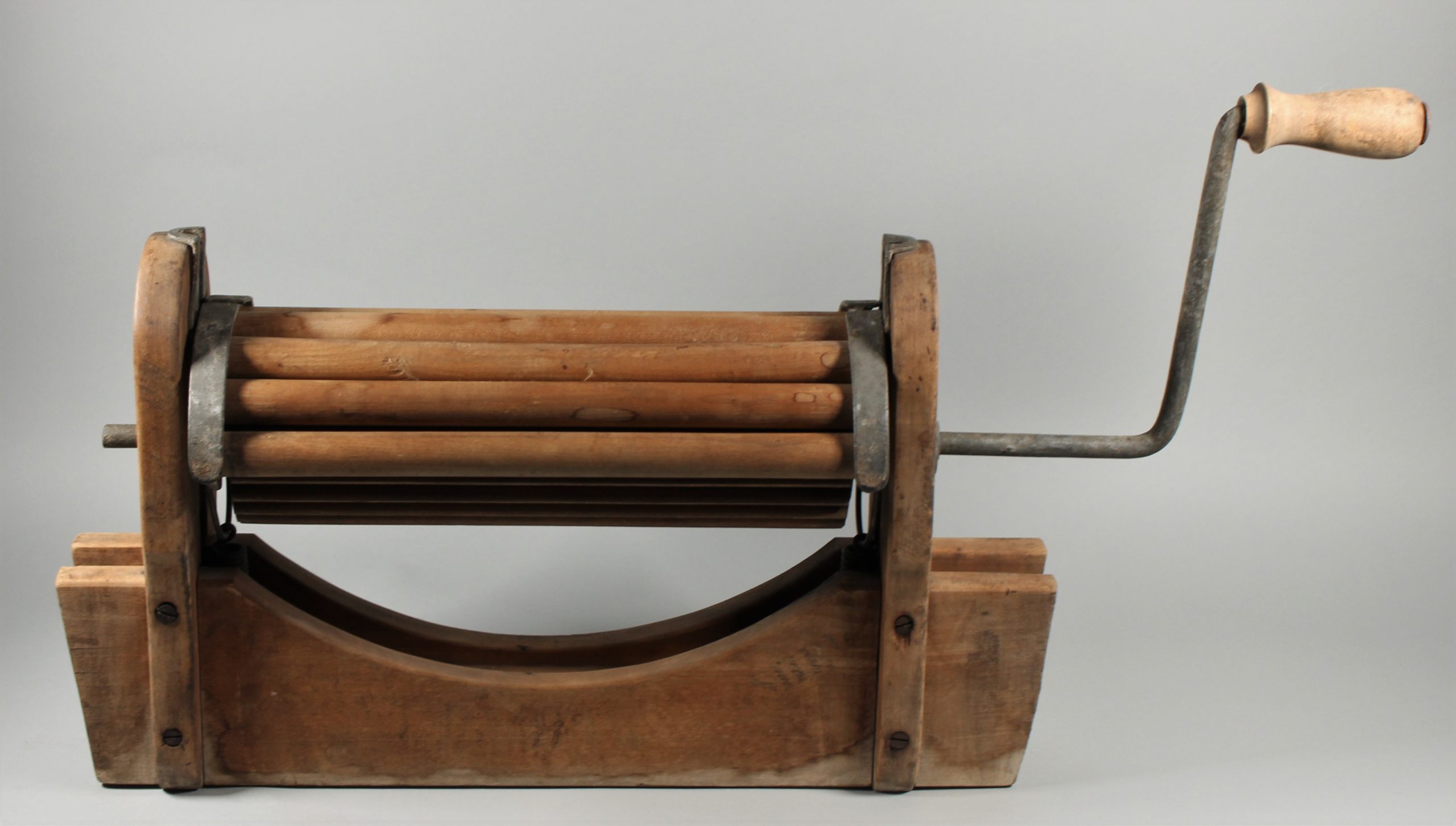
This Calkins Champion clothes wringer (HF.25.46b) would be placed atop a sturdy bucket so clothing could be cranked through with the hand crank to wring out excess water.
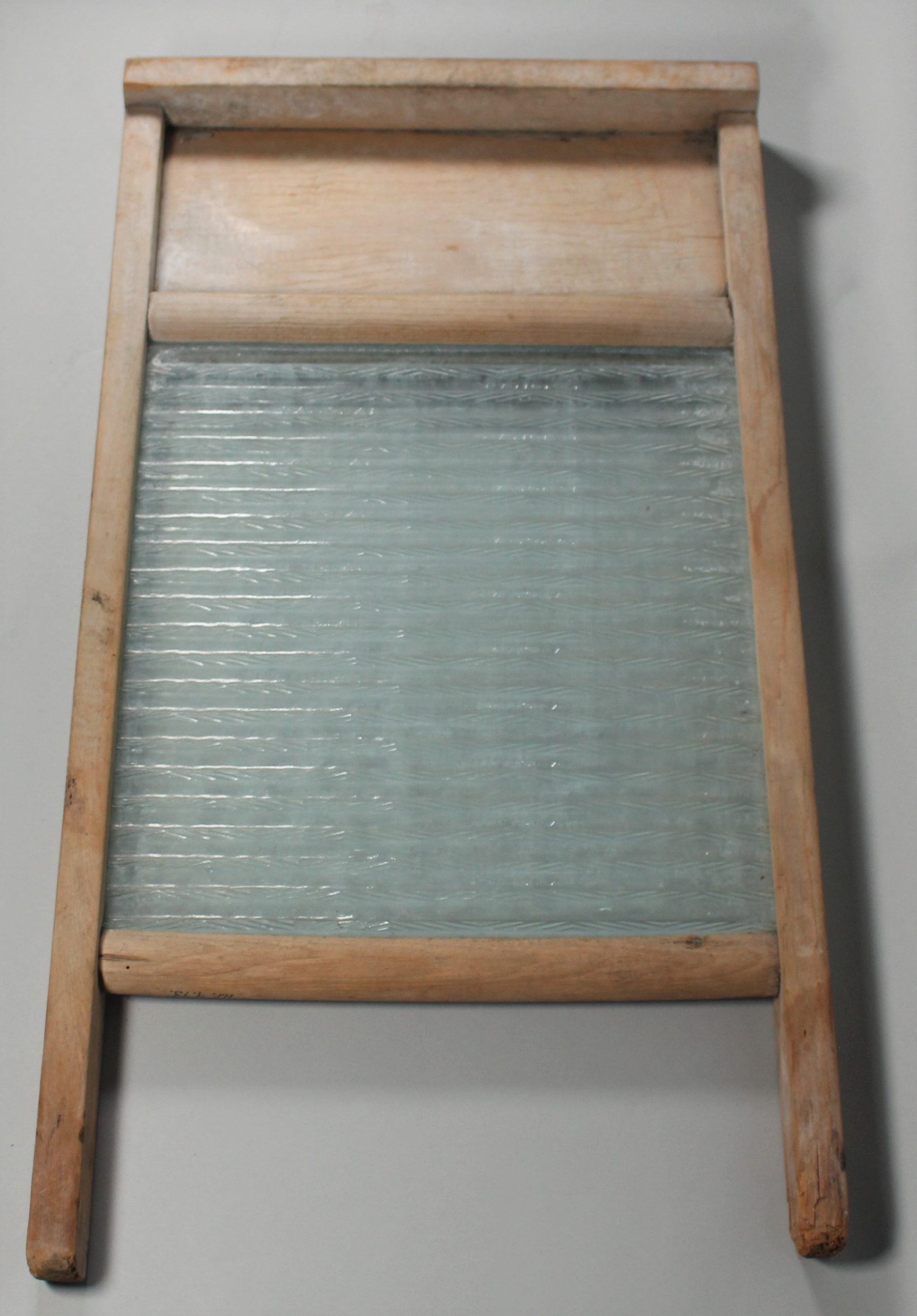
This wooden and glass washboard (HF.9.73) was used to scrub clothes before washing machines were invented.
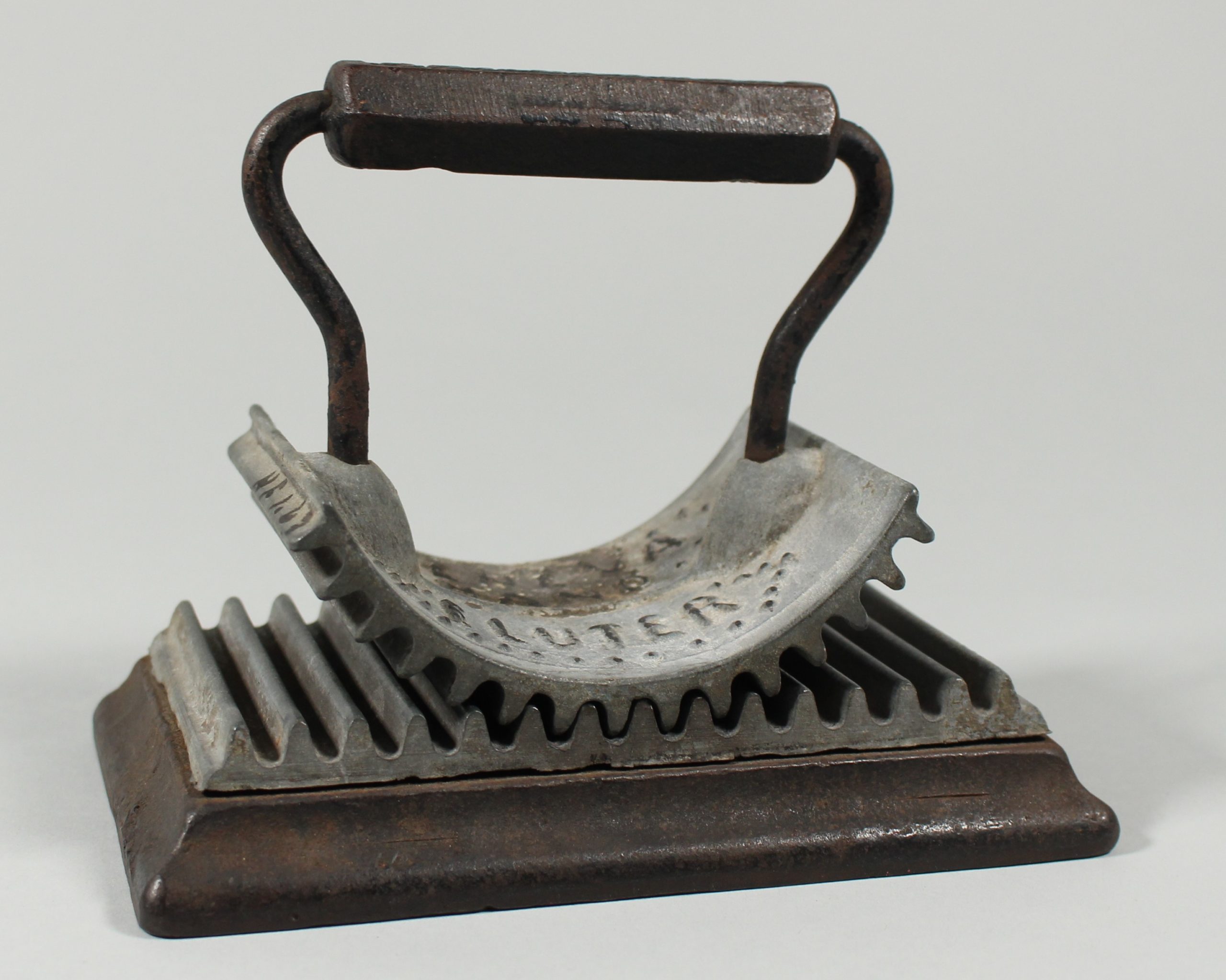
This fluting iron (HF.1.63a-b) was used to press clothing with trims and ruffles. It is seen here with a rest.
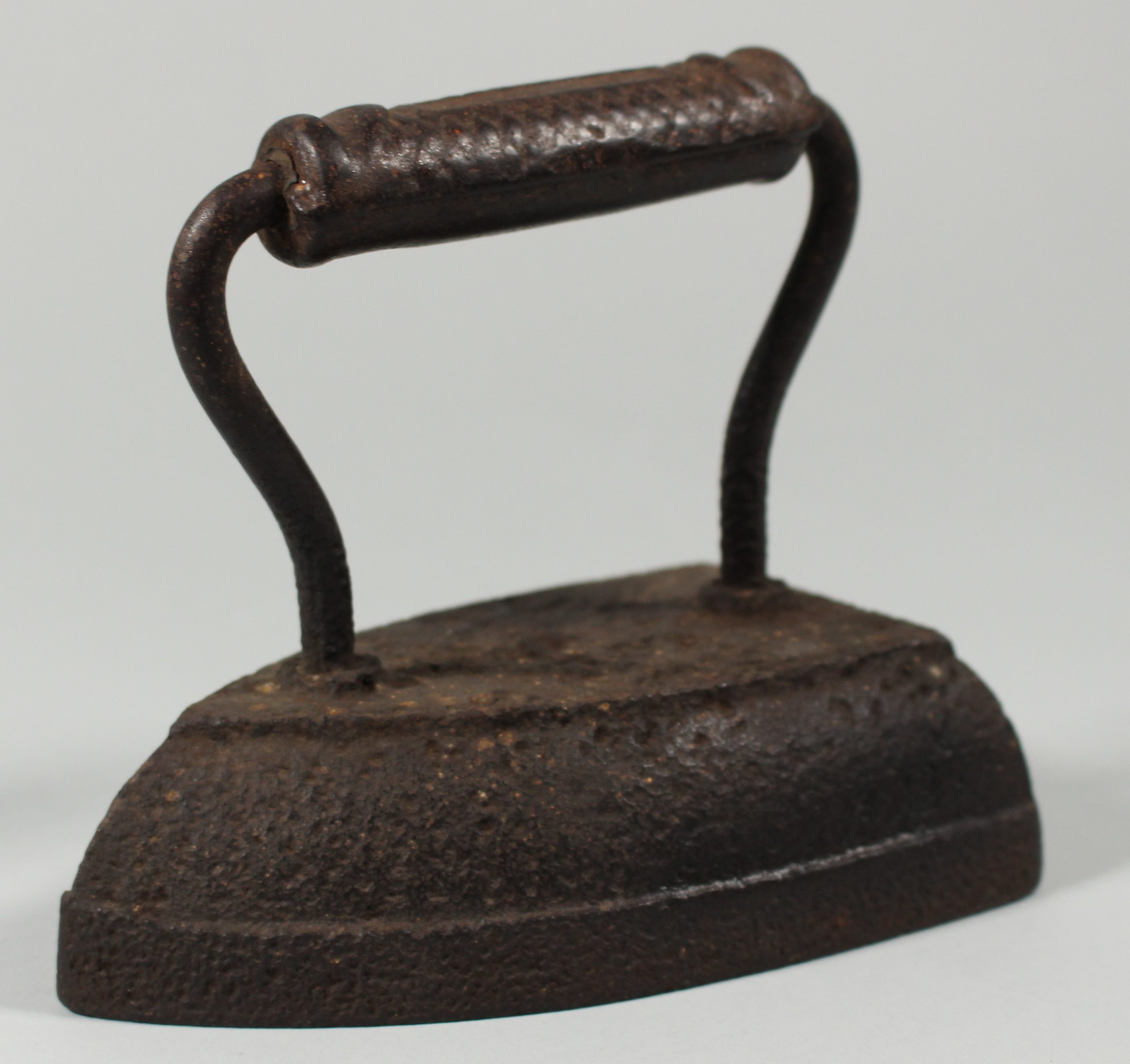
This sadiron (HF.37.46) gained its name because it is solid metal, including the handle. When the iron would heat up, a mitt or heavy fabric had to be used to pick up the handle.
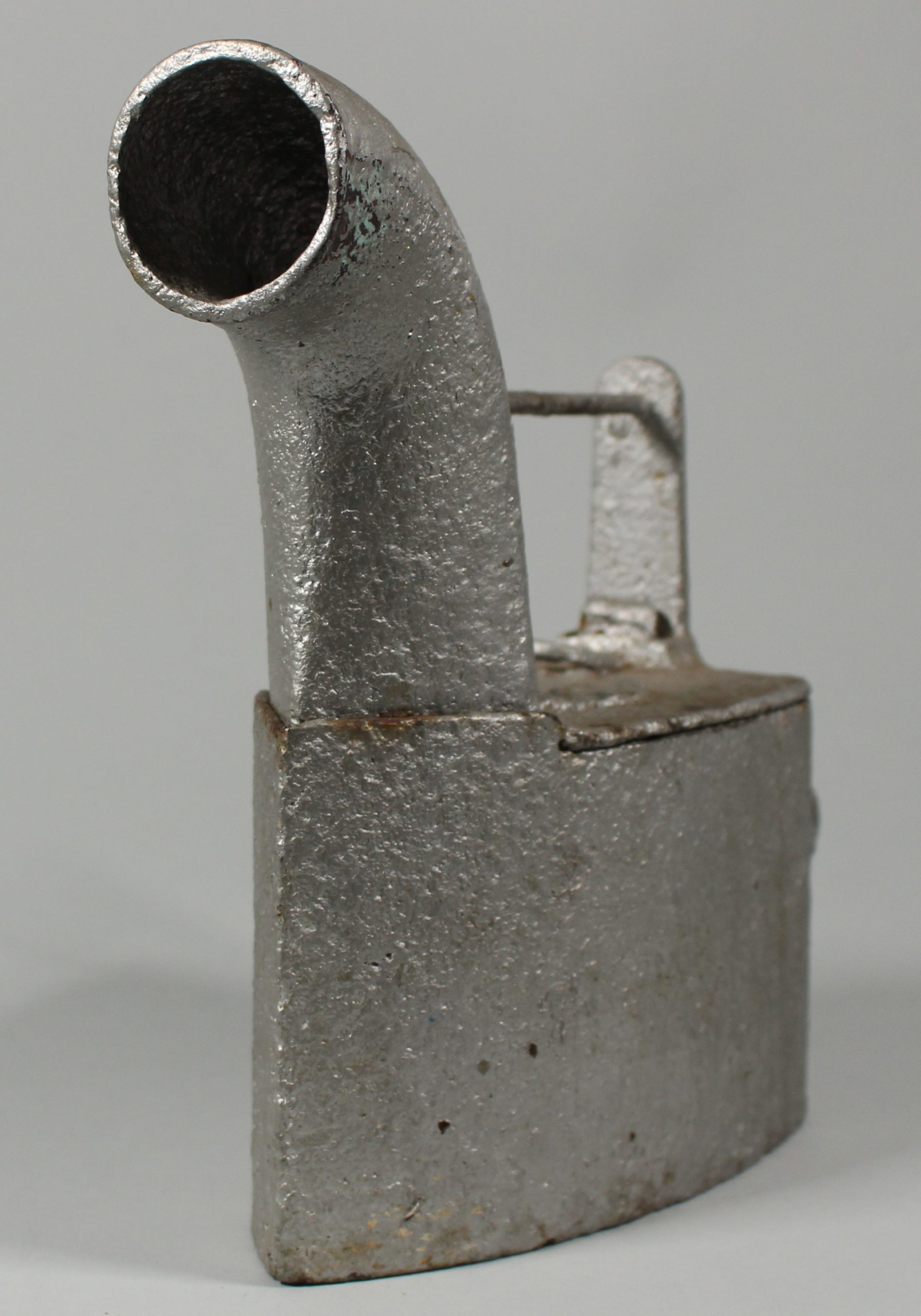
This silver painted charcoal iron with a hinged lid and chimney (HF.14.60) required some skill to use. After the charcoals were heated, it was difficult to keep smudges and ashes off of the clothes that were being ironed with this tool.
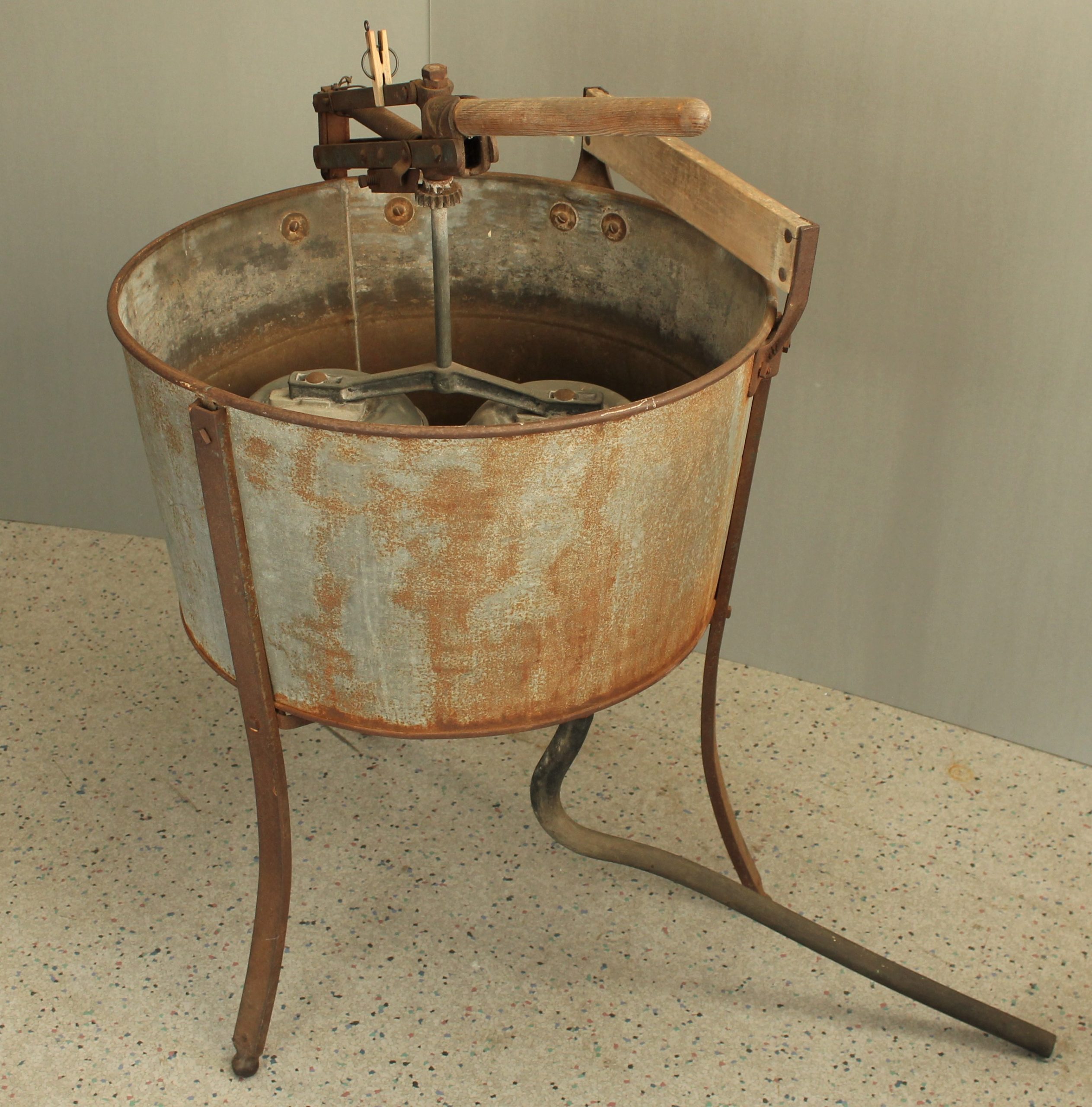
This metal tub washing machine with lever and disks (HF.11.73) was used before modern electric washing machines were invented.