Sewing and knitting were pastimes for women of the time. Lady’s magazines often included printed patterns with the latest trends. Macramé was revived in the Victorian era as a less expensive alternative to sewing. Women would create pillows, curtains, clothes and tablecloths for their homes in their free time. During the beginning of the 19th century, sewing was done mostly by hand but in 1846, the first practical sewing machine was patented by Elias Howe and became a common piece of equipment to see in a household.
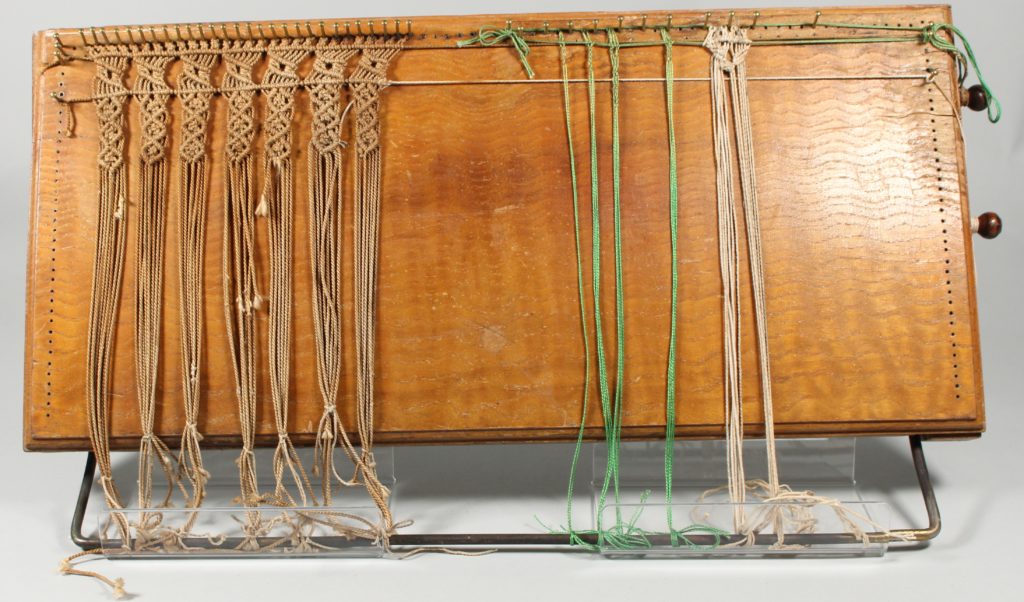
This macrame lace desk (HF.5.60c) was used to create decorative knot textiles.
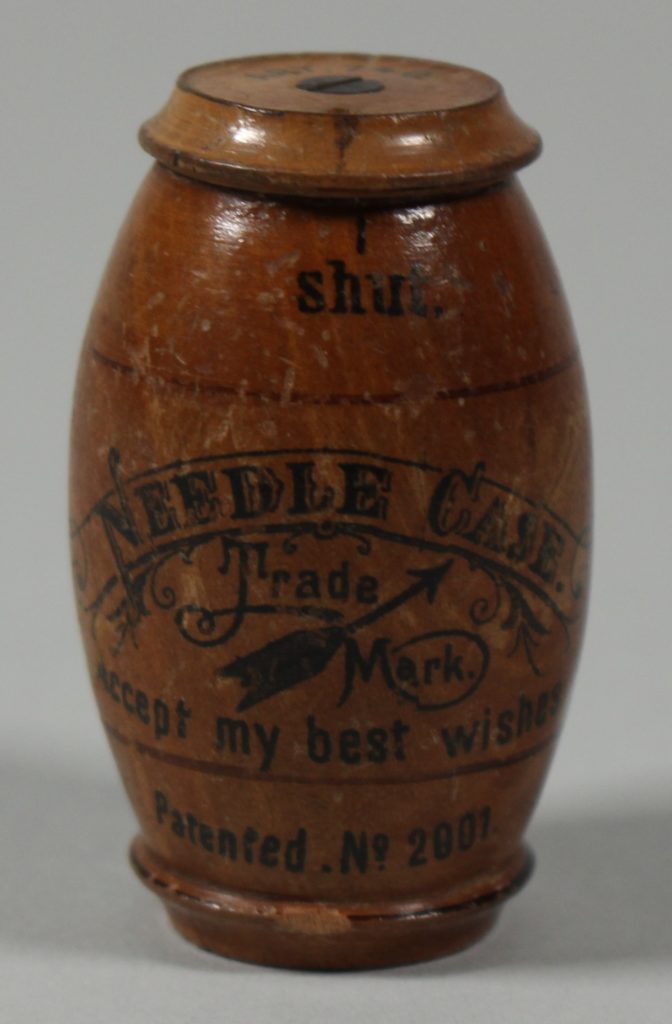
This barrel-shaped wooden needle case (HF.4.69) was used to store needles that were not being used.
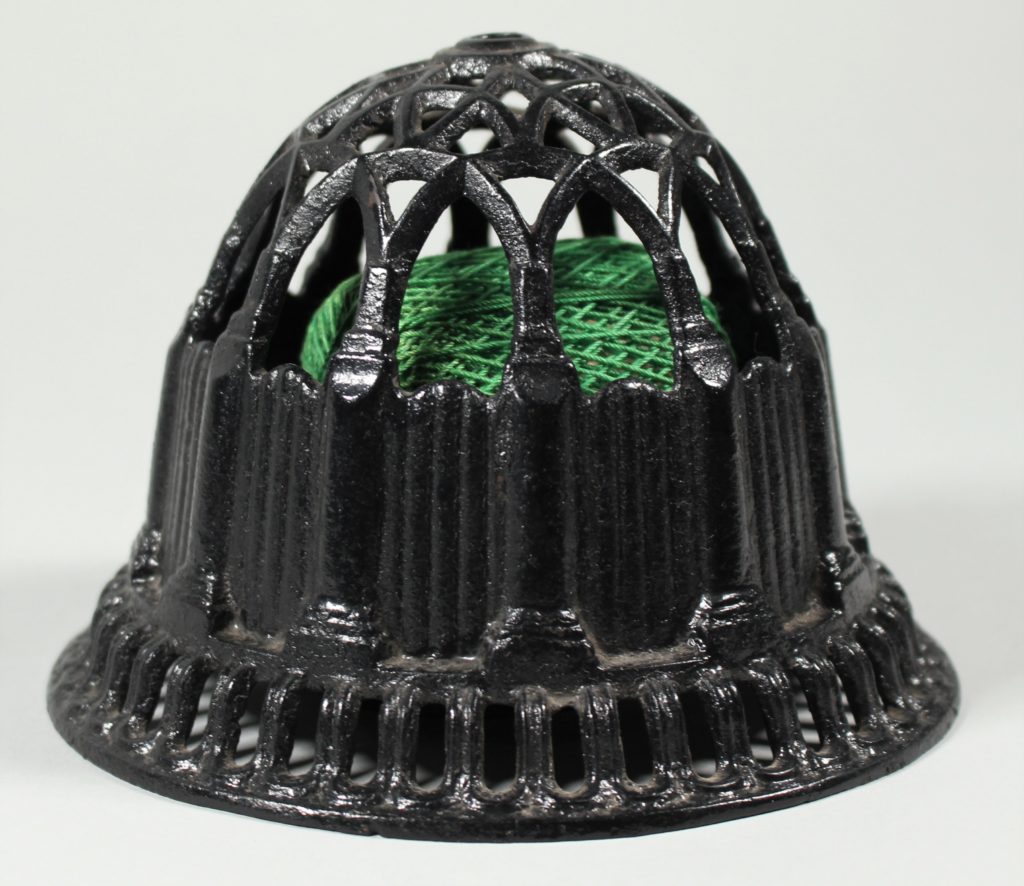
This black wrought iron string holder (MH.25.60) was used to feed string through so that it would not completely unravel.
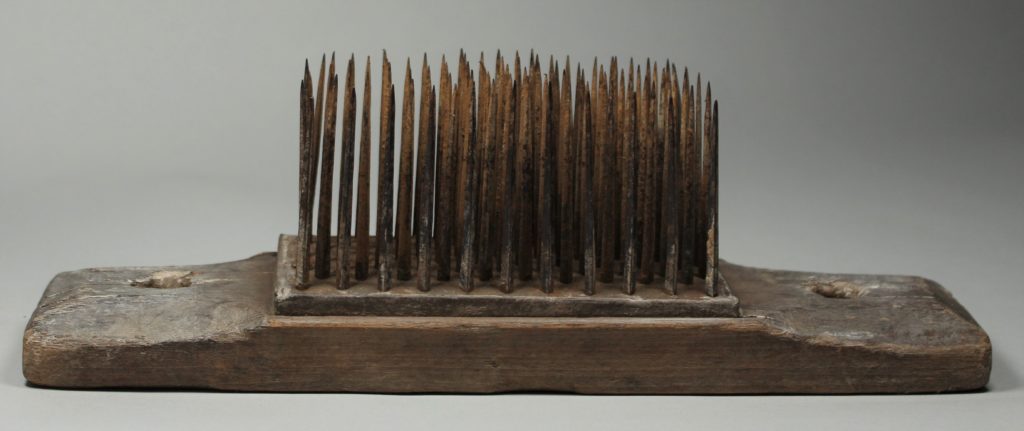
This hatchel (HF.13.46) was used for processing flax. Nails were mounted onto a wooden board and the flax fibers were raked through it.
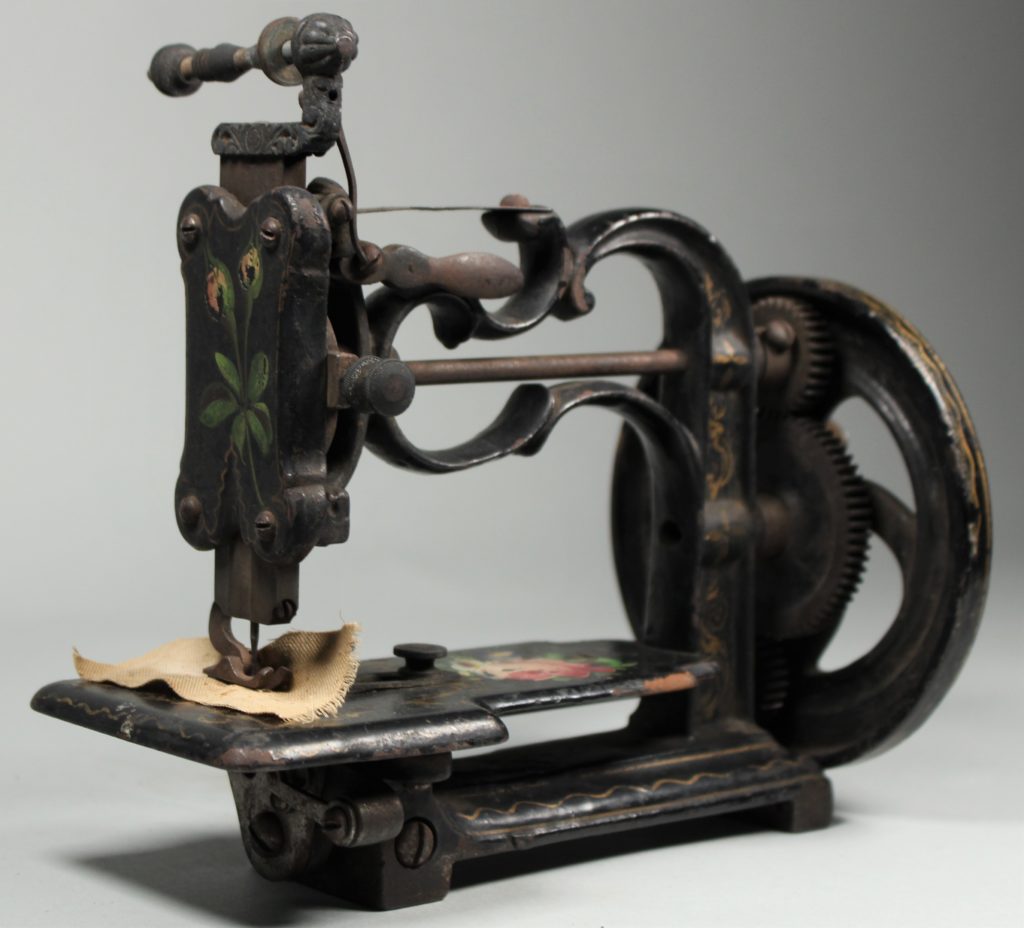
This black iron sewing machine with decorative roses and a hand powered crank (MH.11.58) was used before the modern electric sewing machine was invented.