alt=""
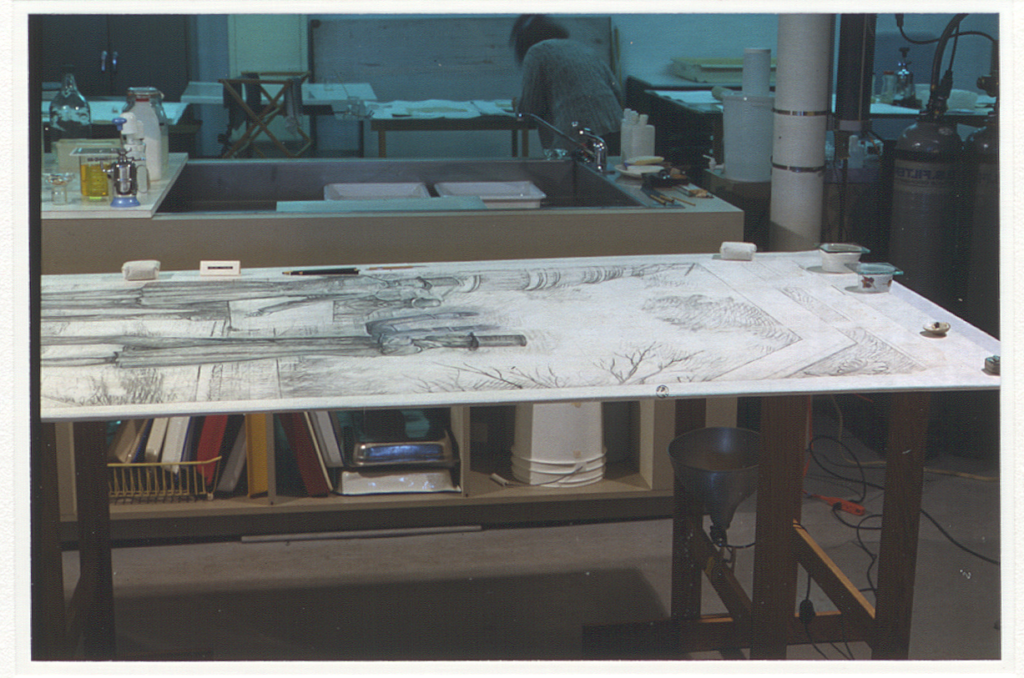
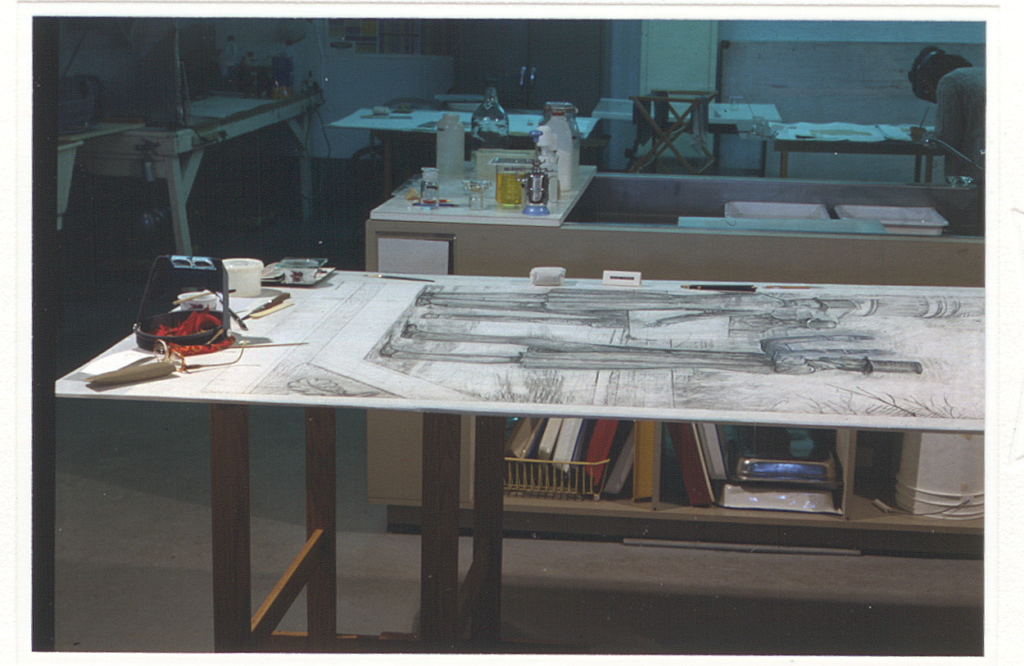
Large paper with sketch sat on table surrounded by tools. A person faces away in the back leaning over another table.
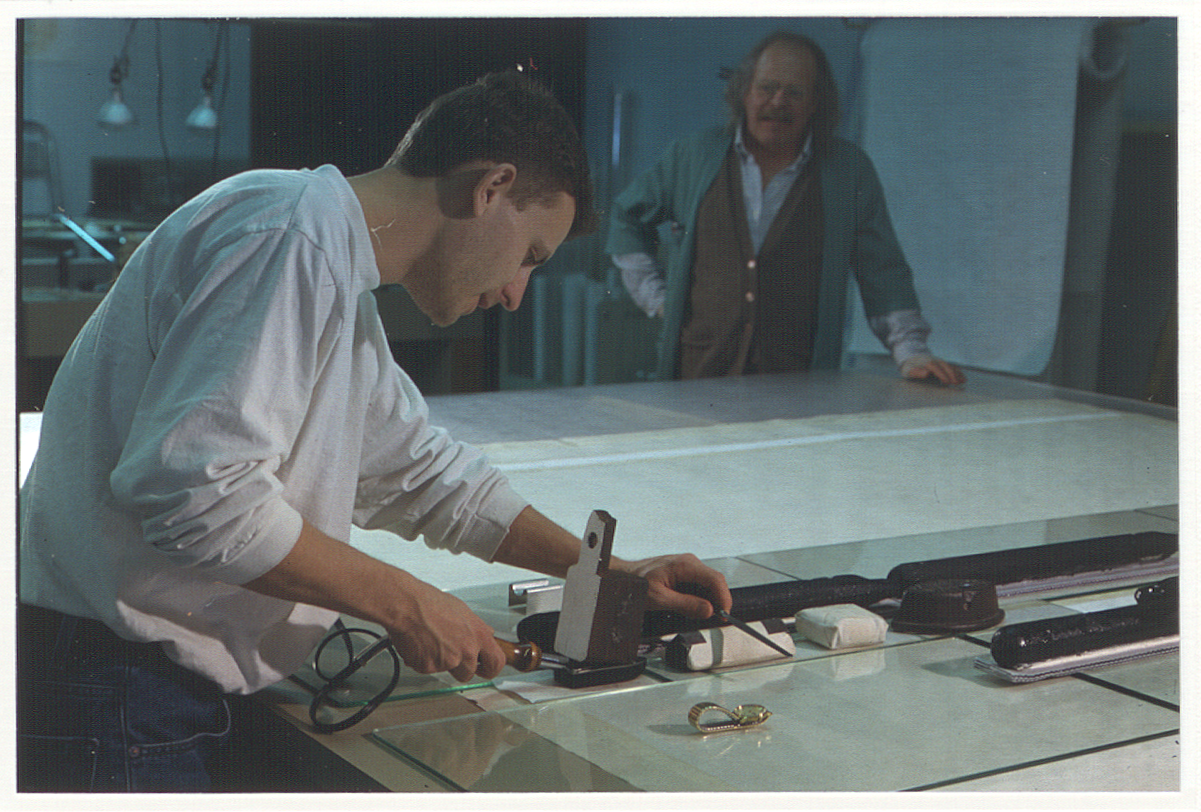
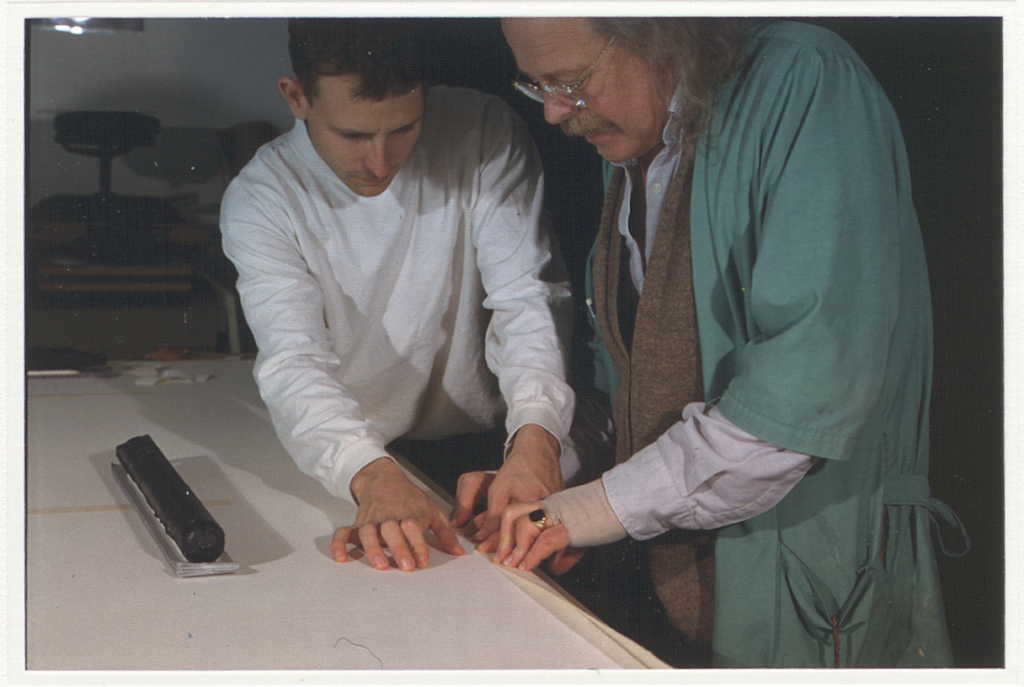
Man leaning over a table with two hands on a device. A long piece of paper is sat under a clear frame below the device. Behind the table is another man leaning on the table watching.

Examining the damage

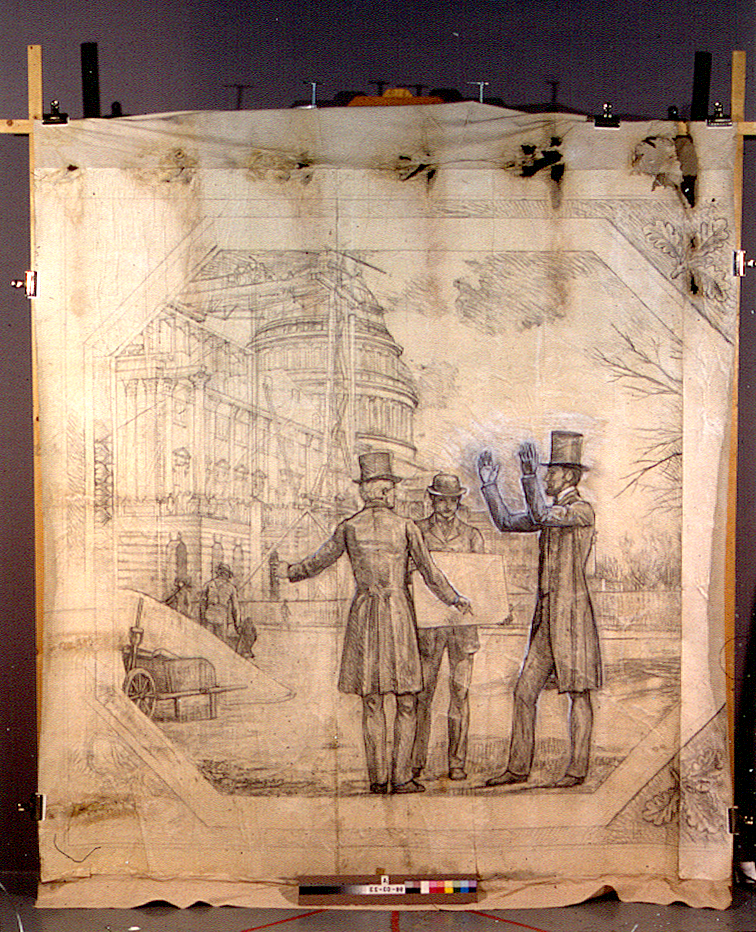
The drawing is executed in litho crayon or grease pencil, gouache & graphite on cream colored paper. It is in three vertical panels mounted on a medium weight, tightly woven canvas to form one complete drawing. Overall size is approximately 203.2 x 203.5 cm (80 x 80 1/2 inches).

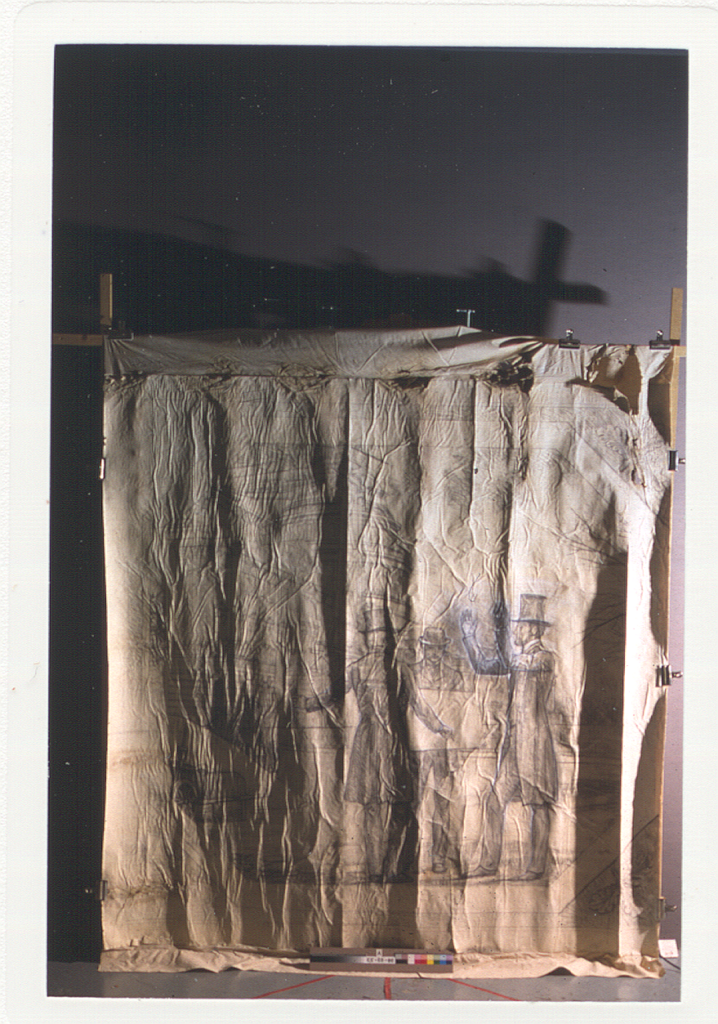
When conservator Tom Edmondson examined the cartoon he found the canvas backing to be soiled, wrinkled, water stained and severely damaged by mold along the right side and across the top. A large area was completely gone at the top left. The paper, mounted to the canvas with what appeared to be a PVA emulsion adhesive, was extensively cockled and creased. It was badly soiled as well as yellowed and discolored from its own acid content and stained from the adhesive.

Paper sketch held up on a wooden frame. The illustration is not easy to view due to the folds, stains, and holes.

There were numerous cracks, breaks and tears through the design area and along the edges, including a large 12 ½” tear from the bottom up into the design which had been mended with masking tape. There were also tack and pinholes throughout — a result of “pouncing”, the process of transferring the sketch to the wall’s surface by applying powdered charcoal through perforations.

Paper held up on wooden frame with sketch of President Abraham Lincoln motioning to two men while they stand in front of the Capitol having construction done.

The conservators went through a lengthy step-by-step process to correct these defects:

  • Dry clean the surface with eraser materials to remove soil, grime, mold, etc.
  • Remove the canvas backing with solvents and hand-scraping
  • Remove pressure sensitive mending tapes with heat and/or solvents
  • Remove emulsion adhesive with appropriate solvents
  • Wash the paper in filtered & deionized water to remove soluble contaminants &to reduce acidity & discoloration
  • Reduce mold stains & other stains & discolorations with diluted bleaching agents & rinses to remove residual chemicals
Two men leaning over a paper on a table pressing down with tools.
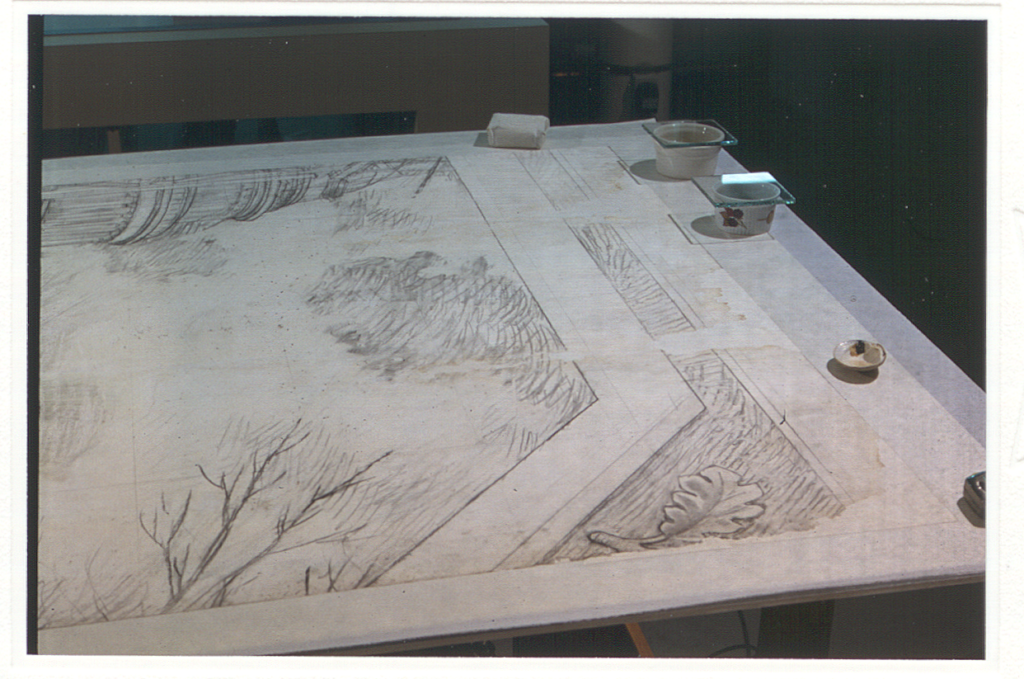
Paper illustration on a table surrounding by tools on the surface.
View of table with paper illustration sat on top. Only the bottom half of the illustration could be seen, and tools are sat on the left side of the table. A person stands facing away in the far back.

This was not as simple as it may sound – these steps involved tedious, painstaking applications and most of them included lengthy repetitions of “apply & wait – apply & wait”.

To remount the drawing and prepare it for framing, the conservators then had to:

  • Fill paper losses with appropriate paper pulp
  • Mend tears and reinforce seams with Japanese tissue & methylcellulose paste
  • Inpaint to restore lost & damaged areas of design
  • Reline with Japanese paper & wheat starch paste and rejoin panels
  • Wrap-mount to semi-rigid Tycore support panel with fine linen pressure-sensitive tape