Horn Book History
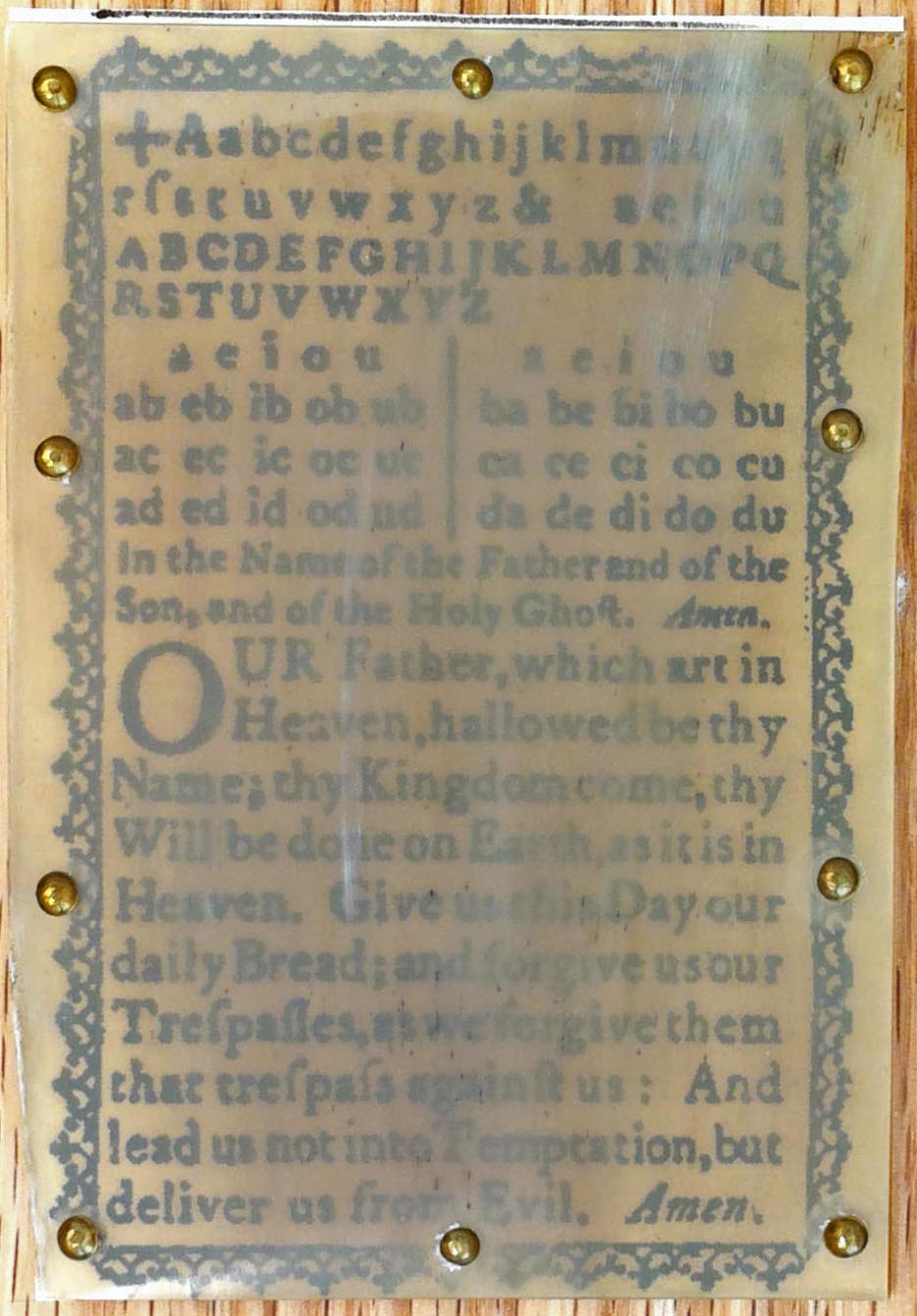
The horn-book was once one of the most important educational tools in existence. Before its swift plunge into obscurity, it was used for nearly 400 years in one-room schools, classrooms, and homes. According to Andrew W. Tuer, horn-book scholar and author of The History of the Horn-Book (1897), the earliest record of a true horn-book is about 1450. The last caches were ordered from a wholesale dealer in stationery and school requisites known to William Hone, a writer and book seller, in 1799.
Over this page, fastened with brass plating and tacks, was a sheet of horn. This piece served as a protective cover for the hand-written page, knowing that children would not heed its fragility. Thomas Tickell, in his work “Poem in Praise of the Horn-book” (1728), said, “The faithful Horn before, from Age to Age, /Preserving thy invaluable Page.”
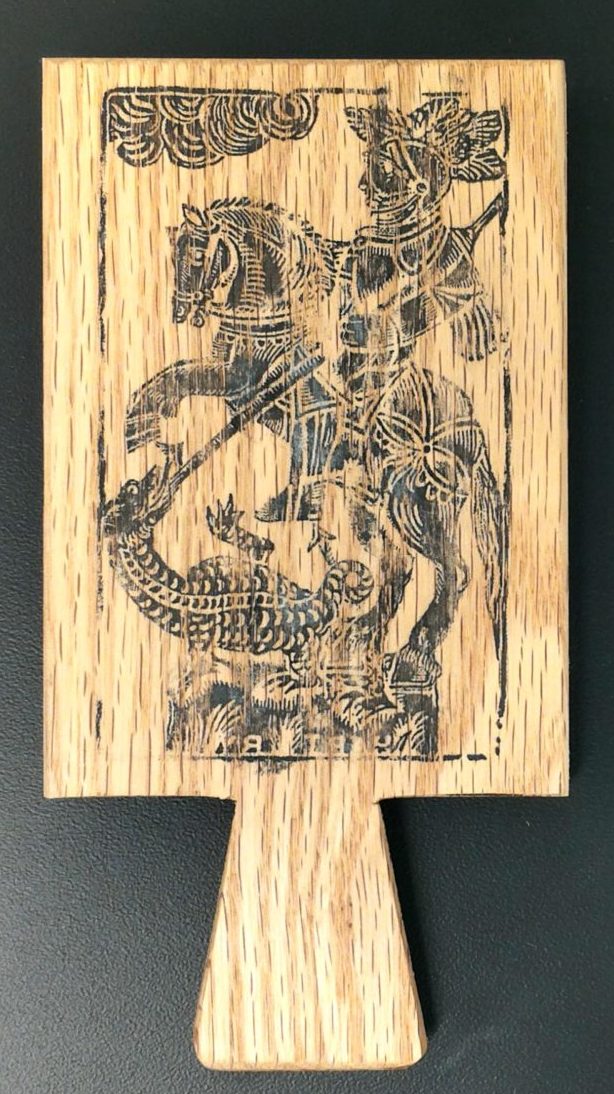
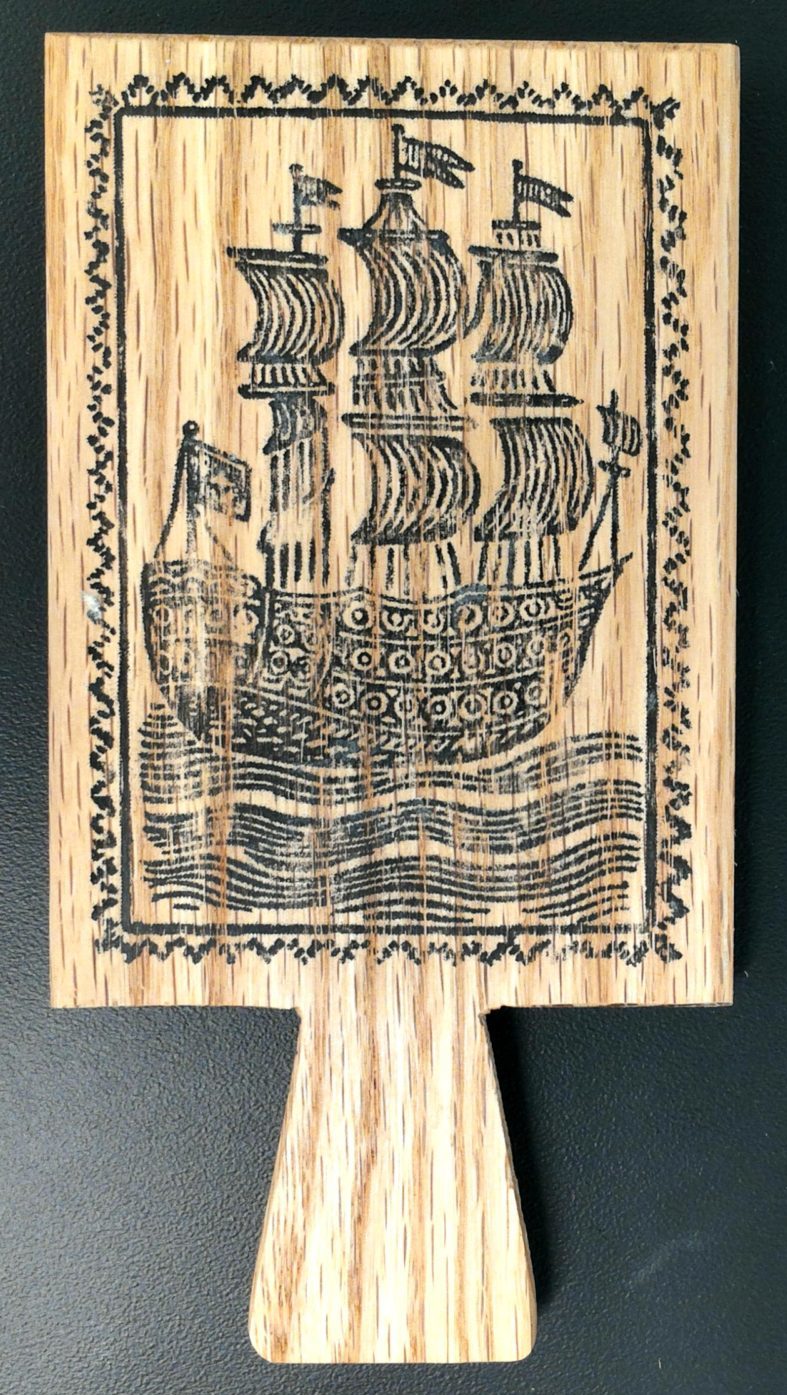
These common illustrations can indicate where a book was made. The Colonial style horn-book most often featured a ship design, whereas the English style featured St. George and the Dragon, military protector of England and symbol of all that is noble and courageous.